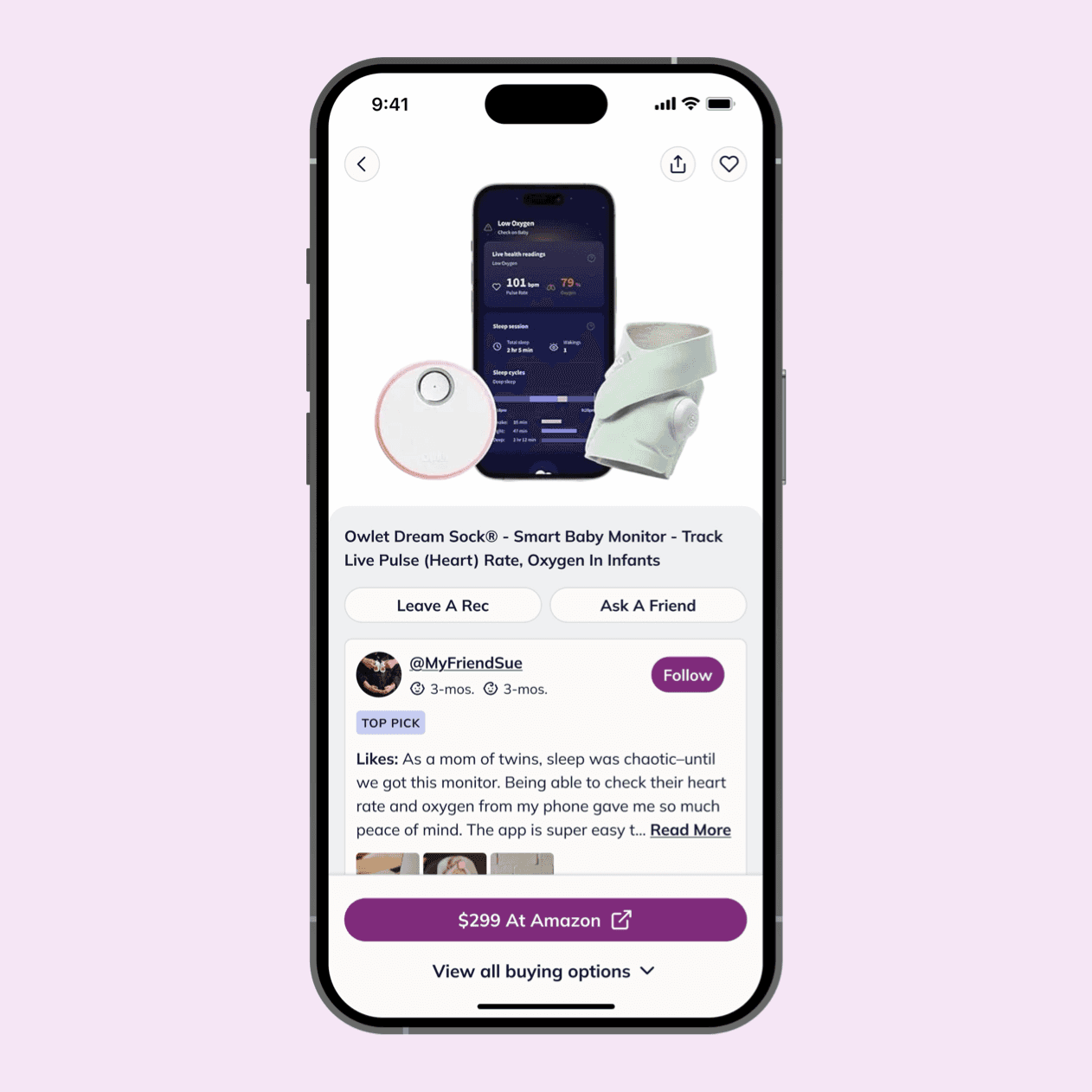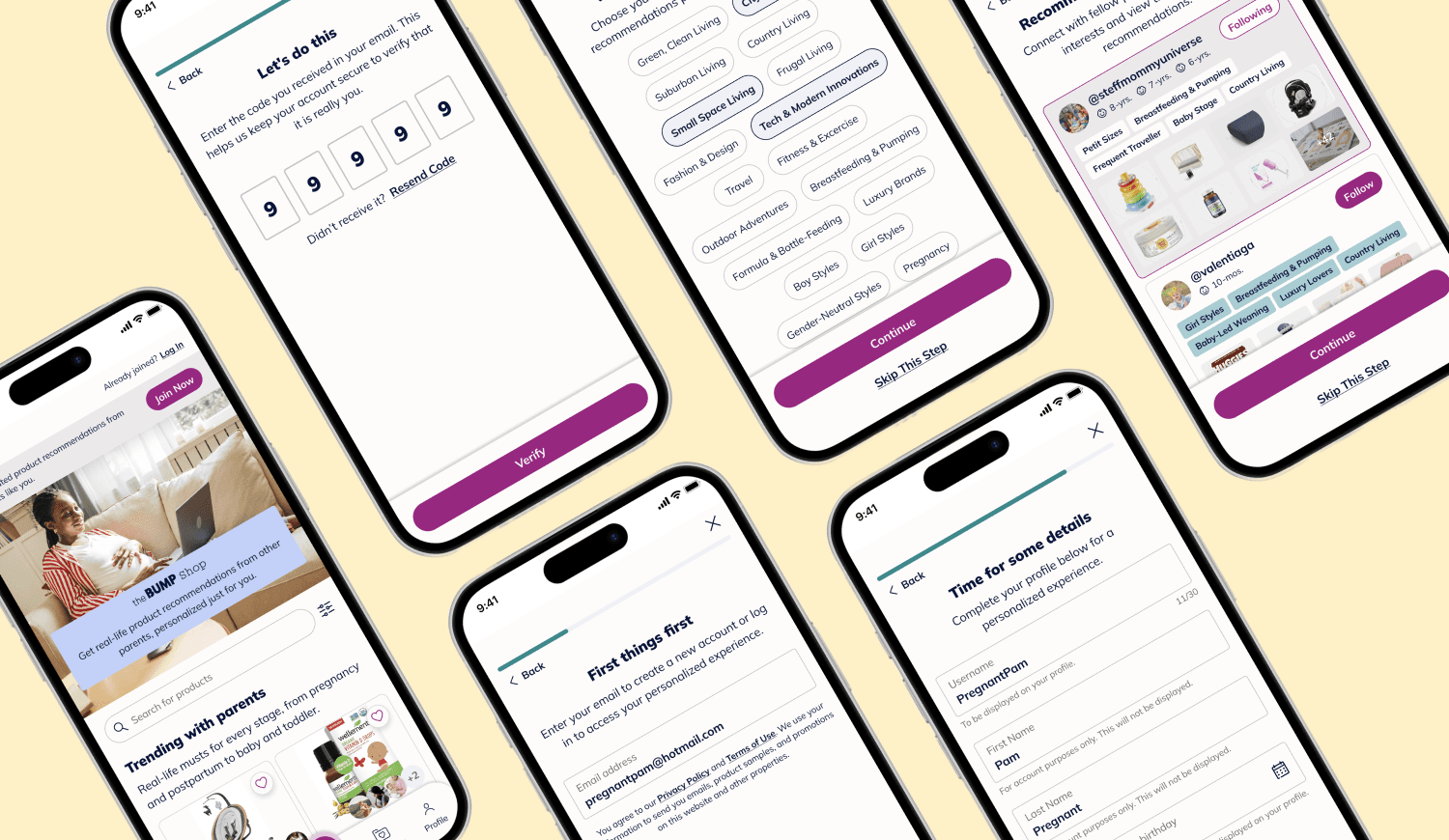
Impact Snapshot
📈 Increased conversion rate from 7.2% to 24.4%.
🔻 Reduced drop-off at “Follow Parents” step from 25% to 5%.
⚡ Designed, iterated, and shipped within 2 weeks.
🤝 Influenced team mindset toward greater flexibility in onboarding.
Context and Problem
Since The Bump Shop’s launch in December 2024, only 7.2% of visitors converted into members. As onboarding flow—designed to welcome and guide users—was instead driving them away.
Heatmaps showed that “X” and “Back” were the most clicked elements across screens. Session recordings revealed hesitation and confusion—especially around the “Follow Parents” step, where users were asked to follow strangers before even understanding the platform’s value.
Usability testing uncovered why:
Users felt forced into following strangers.
They didn’t understand the purpose of selecting interests.
Participants shared a desire for greater freedom and flexibility to explore the product on their own terms.
The issue was clear: friction at the start was blocking value entirely.
Turning Point: Strategy vs Assumption
There was initial hesitation around making onboarding steps optional. The concern was: if users didn’t follow others or select interests, how would they see the platform’s full value?
But the data told a different story.
Heatmaps, session recordings, and user quotes from usability tests made it clear—forcing unfamiliar actions too early was causing users to drop off before they experienced any value at all.
By presenting these insights clearly, we were able to reframe the conversation:
It wasn’t about removing value—it was about removing the barriers to reach it.
This shift in perspective helped align the team around a more flexible, user-first approach that we could test and learn from quickly.
Goals of the Project
Remove friction and reduce drop-off in onboarding.
Increase conversion by letting users reach value faster.
Build a foundation for long-term onboarding flexibility.
My Role & Contributions
Behavior analysis, synthesized insights to inform design decisions.
Designed and iterated the onboarding flow.
Aligned stakeholders and advocated for key changes.
Collaborated with PMs and engineers to ensure smooth rollout.
The Solution
We iterated the onboarding flow to be faster, simpler, and more respectful of user readiness.
Before: The Initial Onboarding Flow
The original onboarding experience focused on community building. The assumption was:
“The more parents you follow, the better your recommendations will be.”
To unlock the full experience, users were required to complete a sequence of steps designed around this idea:
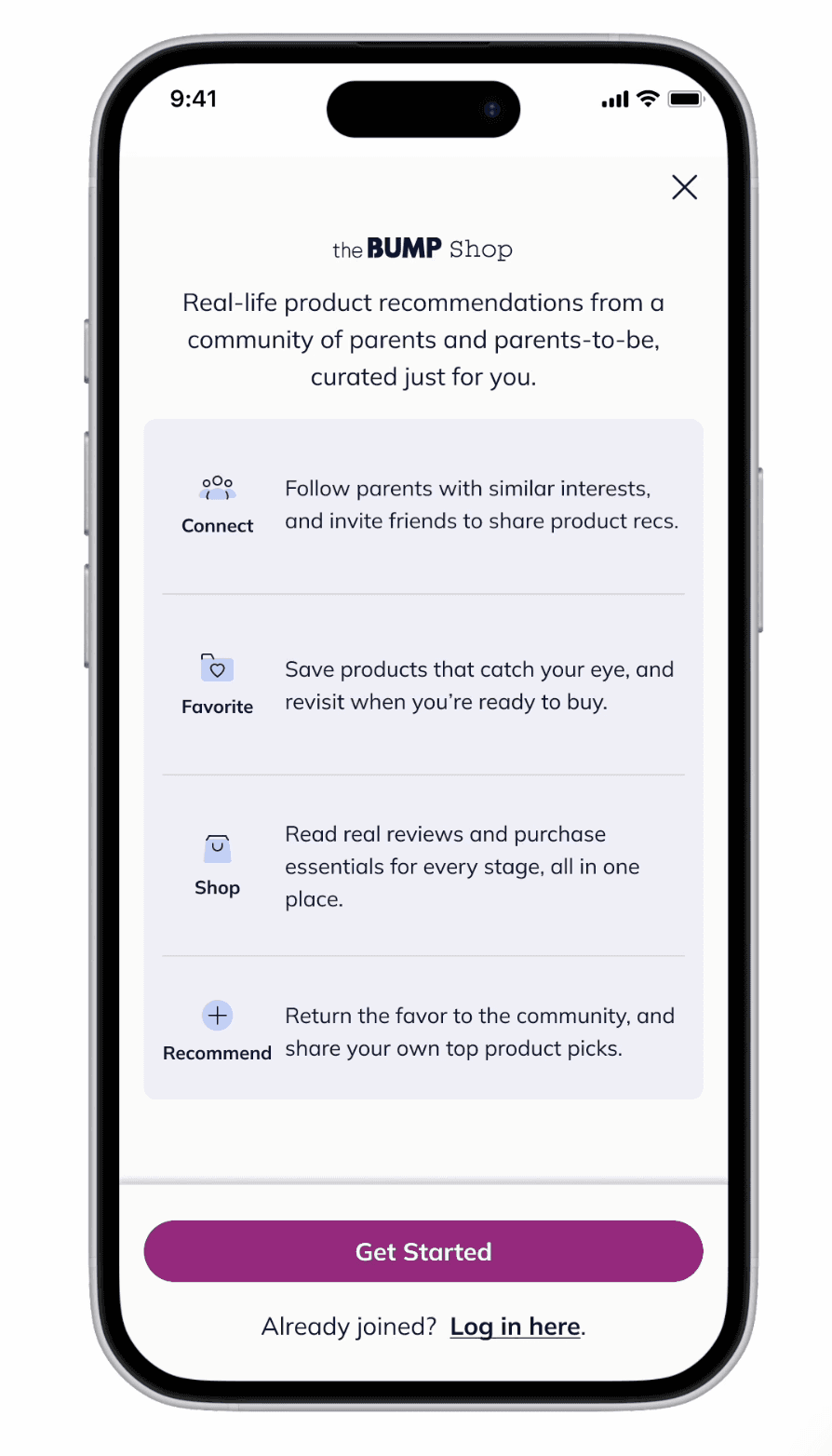
Step 1: Value Proposition Screen
Users were first shown a screen explaining the product’s value prop.
💡 Heatmaps showed "X" (close) was the hottest-clicked area—indicating users preferred to explore before committing.
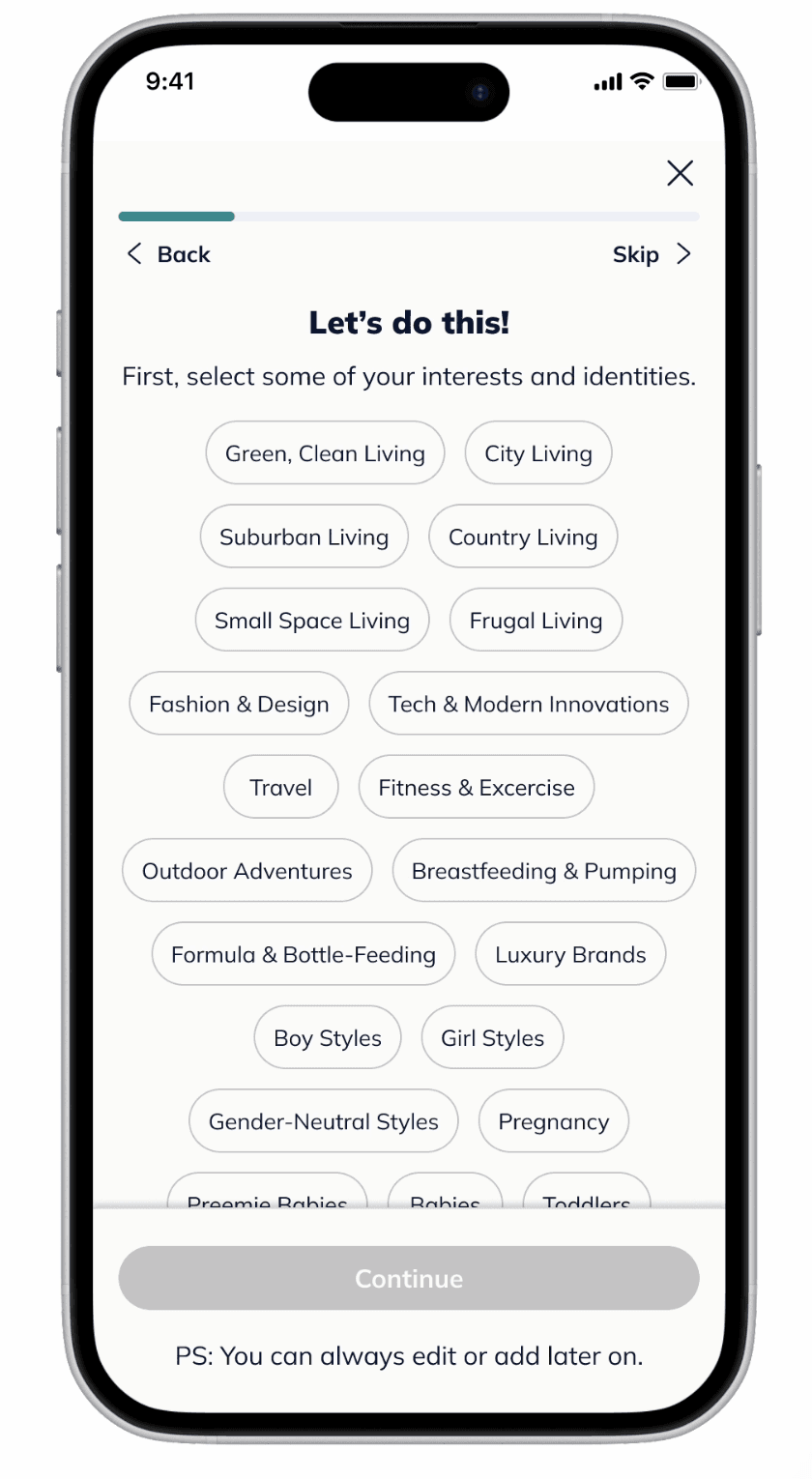
Step 2: Interests Selection
Users could select interests or skip the step.
💡 User testing revealed confusion about the purpose of selecting interests at this early stage.
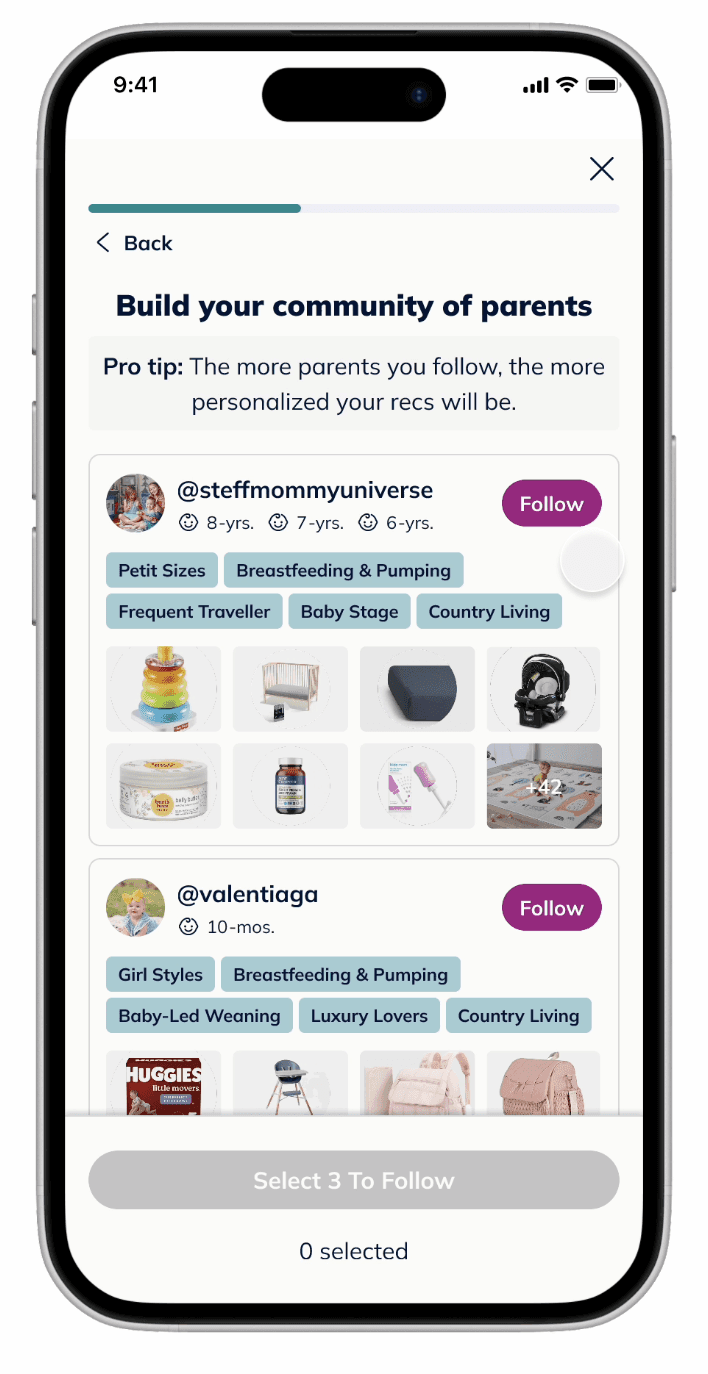
Step 3: Follow Parents
Users were required to follow at least three parents to continue.
💡 Hotjar recordings showed hesitation and and Mixpanel showed a high drop-off rate for this step. Participants during usability tests later expressed feeling forced to follow strangers, preferring more freedom.
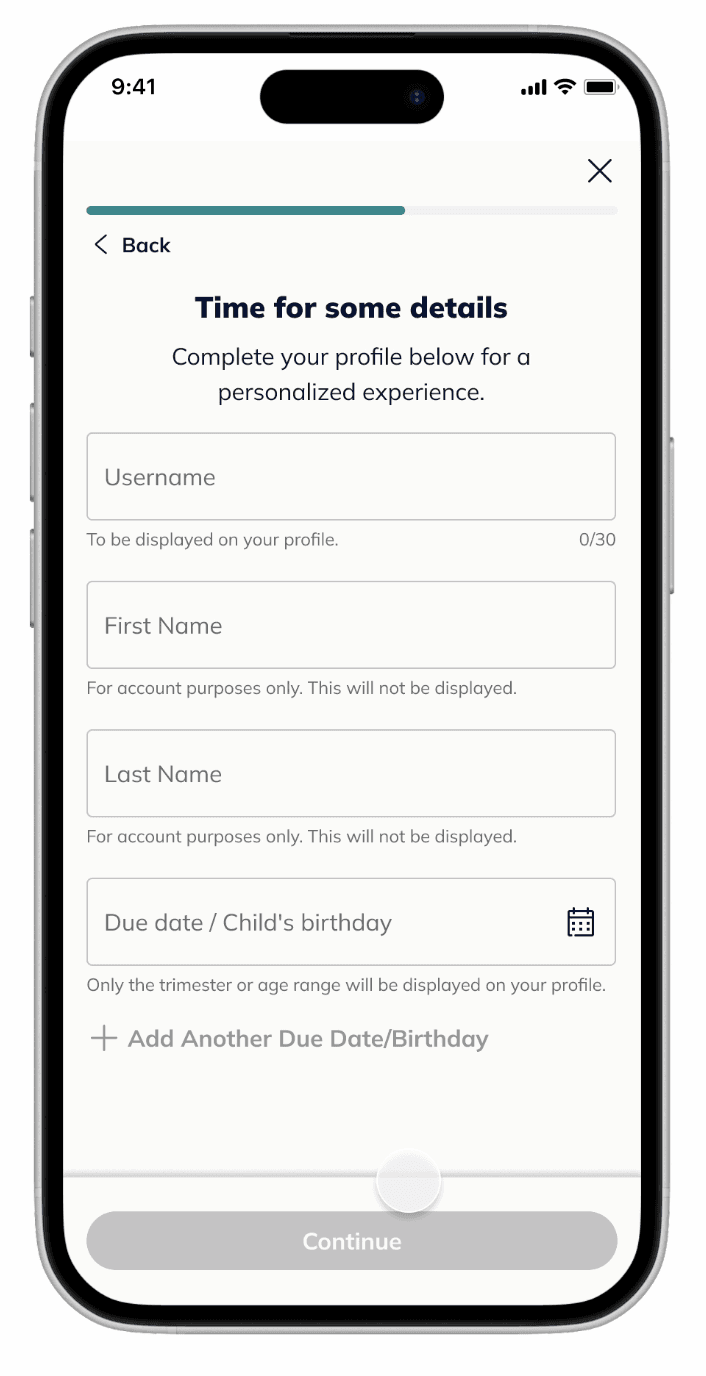
Step 4: Account Information
Users provided a username, first name, last name, and due date or birthdate.
💡 No major usability issues were found during testing or data analysis.
Step 5: Email Entry
Users entered their email address.
💡 No major usability issues emerged during testing or data analysis.

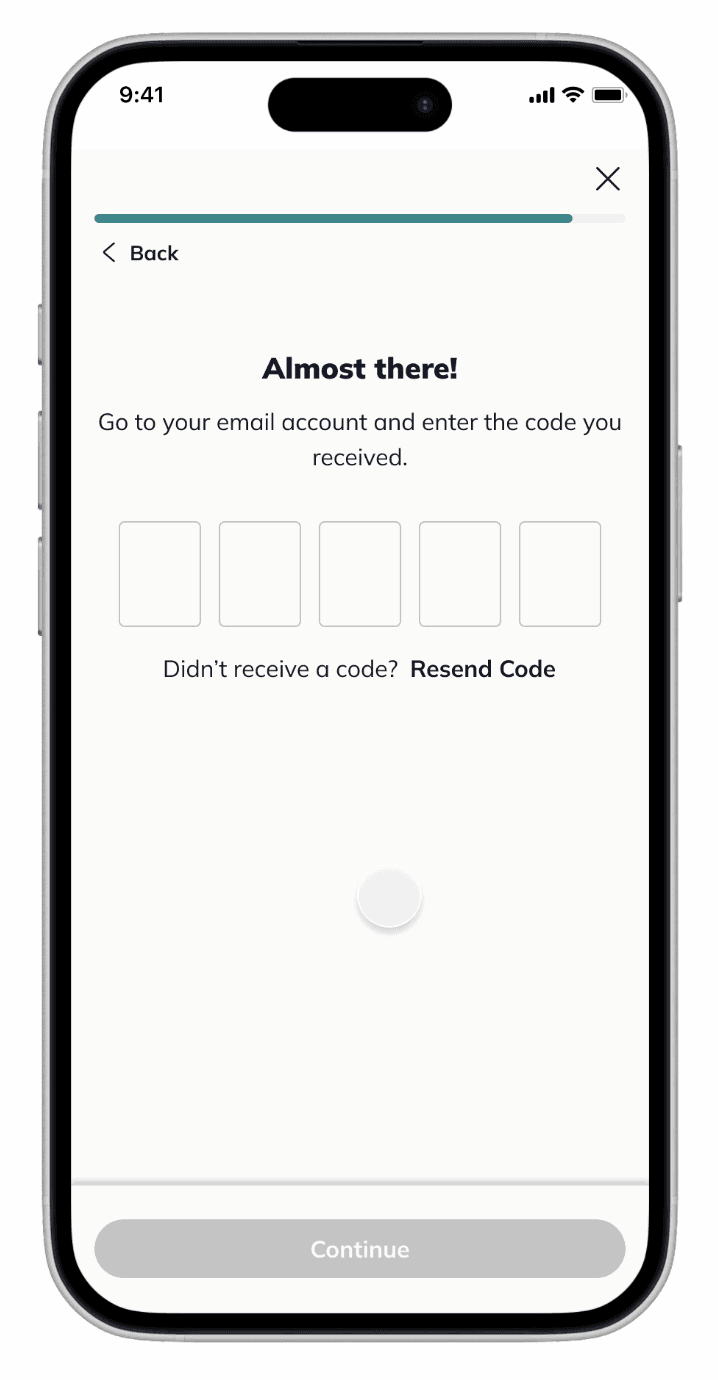
Step 6: Email Verification
Users verified their email with an OTP code.
💡 While the flow worked smoothly, testing surfaced user concerns about security and data protection.
Summary:
The original flow prioritized community setup before product exploration.
But behavioral data and user feedback revealed that forcing early actions caused friction, hesitation, and abandonment—before users ever saw the platform’s real value.
After: New Onboarding Flow
The new onboarding experience focused on speed, simplicity, and user autonomy—removing barriers so users could reach value faster.
Account Creation First
Users now start by entering their email address followed by OTP verification:
If the email exists in the database, users are logged in immediately.
If not, they proceed through a streamlined onboarding flow.
Interests and Follow Parents (Optional)
Instead of forcing early actions, "Interests" and "Follow Parents" steps were moved after account creation—and made optional.
Clearer Copy for Optional Steps
We updated messaging to:
Explain the benefits of selecting interests and following parents
Reinforce privacy commitments
Build trust without pressure
Logged-Out Experience Replaces Value Prop Screen
We removed the static value proposition screen entirely. New visitors now get a small, interactive preview of the product before being asked to register.
Summary:
The redesigned flow prioritized earning user trust through transparency and flexibility.
By letting users explore and act at their own pace, we removed major blockers—and tripled our conversion rate.
Outcomes & Impact
🔼 Increased conversion rate from 7.2% to 24.4%.
🔽 Reduced drop-off at “Follow Parents” step from 25% to 5%.
🧠 Helped shift company mindset away from rigid onboarding practices.
🔁 Built a scalable, user-first onboarding foundation.
Lessons Learned
Users don’t resist onboarding—they resist being forced
Giving users control leads to better engagement and stronger metrics.Behavioral data instead of gut feeling
What felt “necessary” to leadership turned out to be the main blocker.Fast, simple experiments can drive big outcomes
Small, insight-driven iterations led to rapid improvements in key business metrics.
Next Steps
Monitor post-launch behavior to refine copy and interaction points.
Introduce onboarding paths based on where users started their journey.
Conclusion
This project was a reminder that user trust is earned, not forced. By simplifying the experience and letting users move at their own pace, we helped more people reach value—and converted 3× more users in the process.
It wasn’t just a UX win. It was a shift in how the team thinks about onboarding, product value, and user freedom.